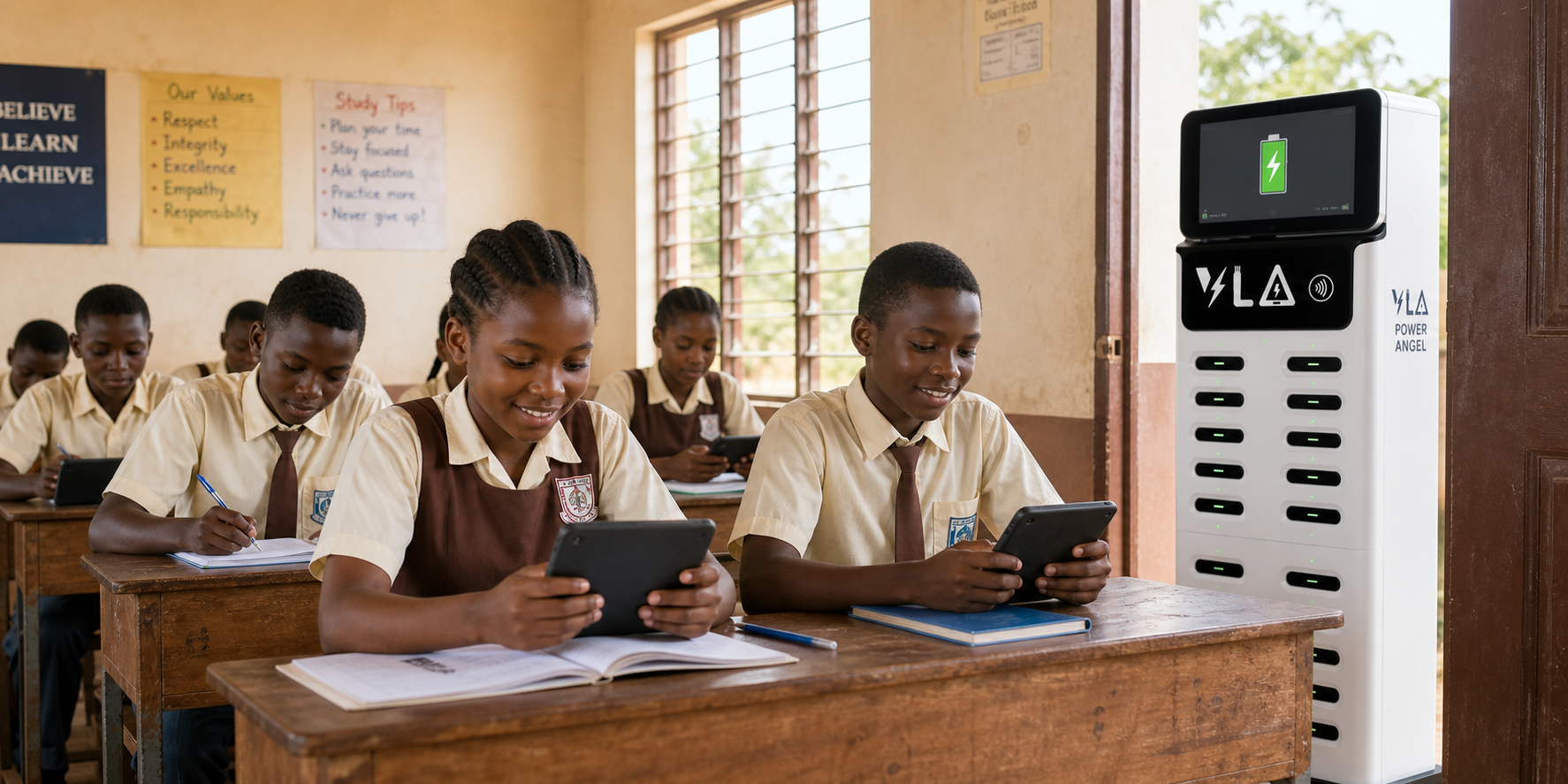
Students stay online during power interruptions
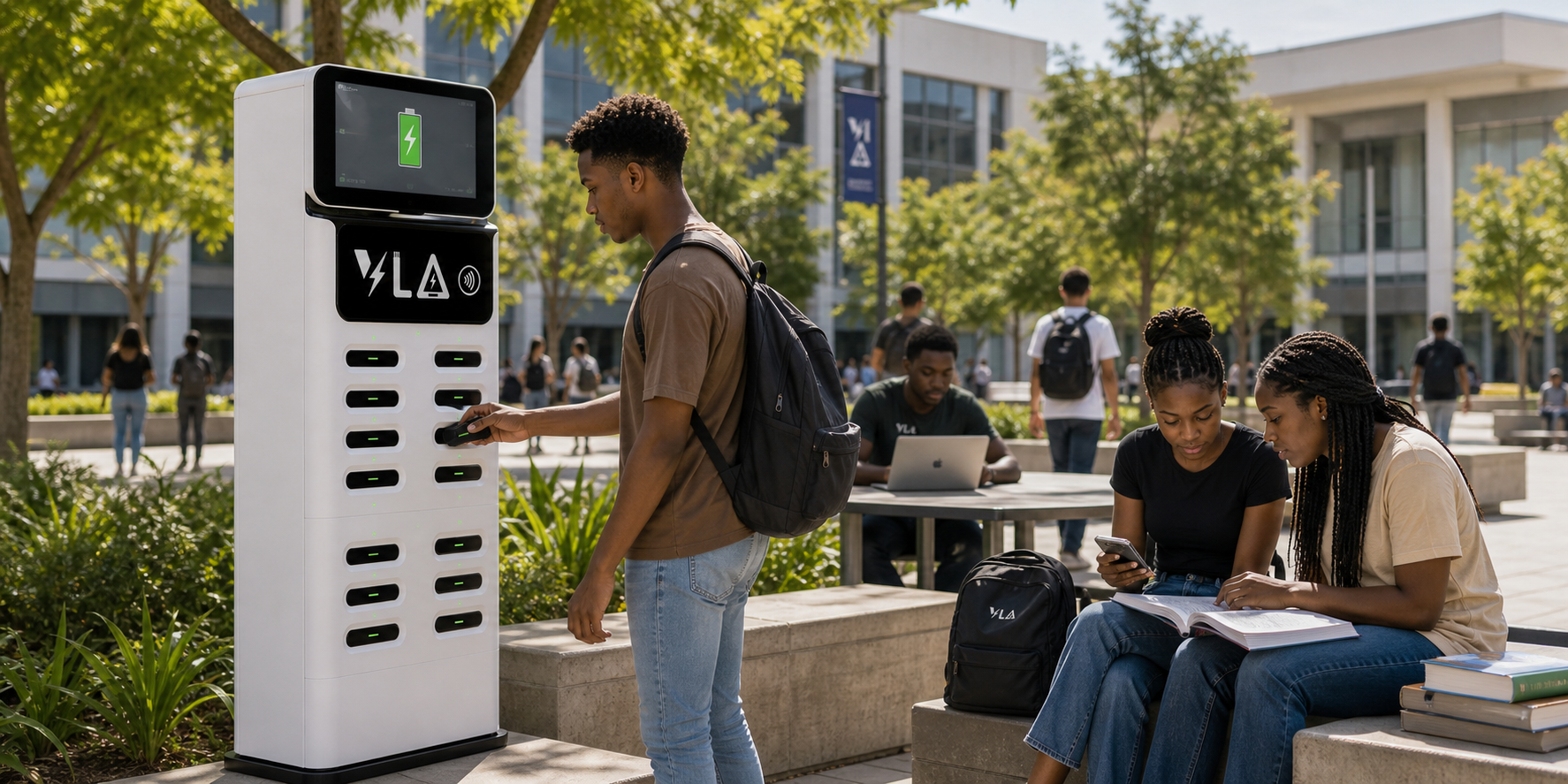
Campus stations near libraries, dormitories, and cafeterias help students continue online classes, research, assignments, and family communication when power is unreliable.
Impact
VLA treats shared charging as a human infrastructure service. A single station can support a student's online class, a merchant's mobile payment, a commuter's safe trip, or a family's essential call.
Users served across public venues, campuses, retail districts, and community spaces.
Charging sessions delivered for work, study, payments, and family communication.
Local employee share across African operations, maintenance, and support teams.
Power Angel
Power Angel is VLA's social access program for students, young entrepreneurs, and communities affected by frequent outages. Each program can combine sponsored rental quotas, low-price time windows, station-based education, and partner reporting.
Stories

Campus stations near libraries, dormitories, and cafeterias help students continue online classes, research, assignments, and family communication when power is unreliable.

Mobile payment, delivery coordination, social selling, and customer replies all depend on battery. VLA places charging service close to where local commerce happens.

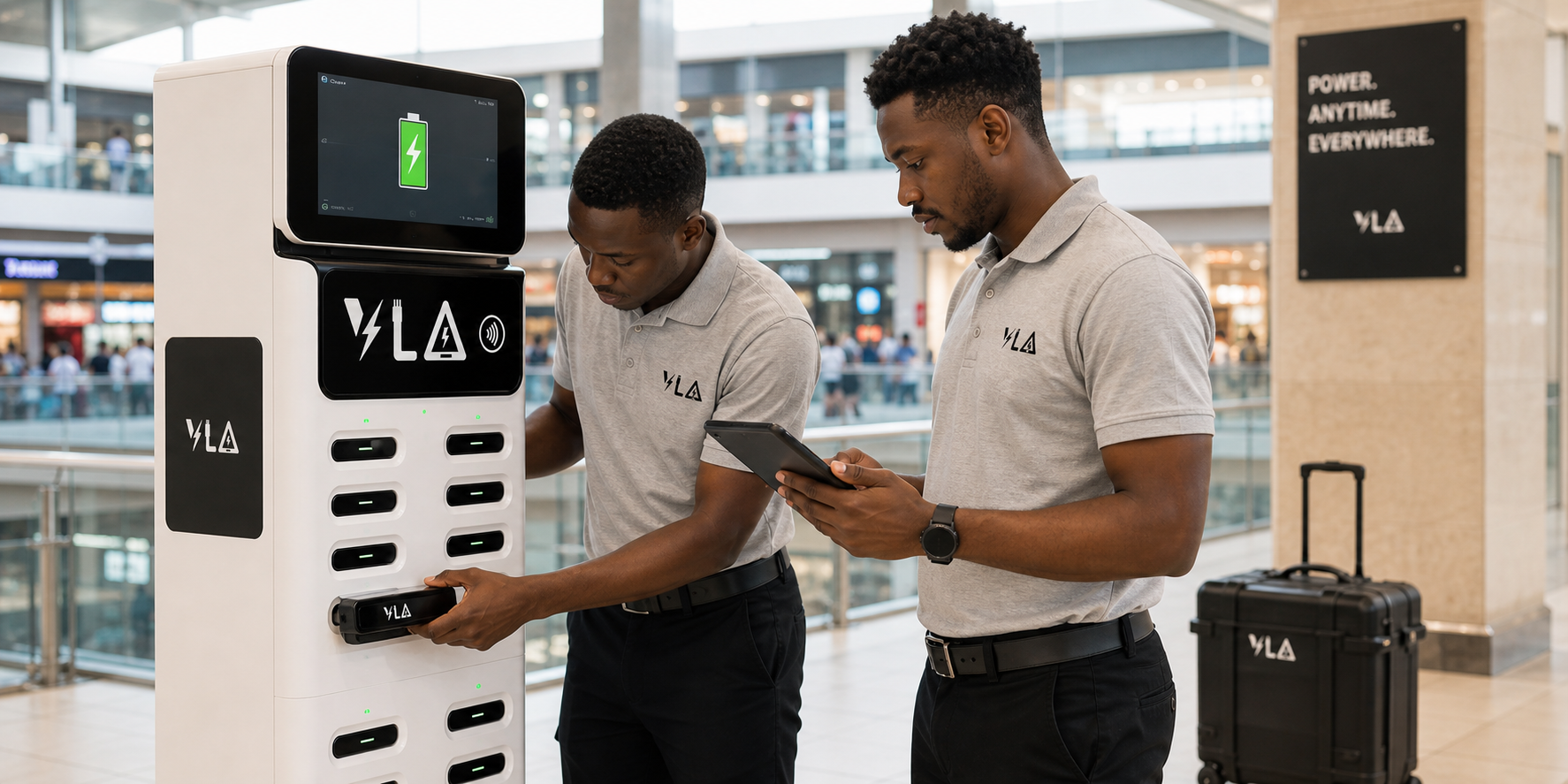
VLA hires and trains local maintenance, inspection, customer support, and venue success teams so the shared energy network becomes part of local employment growth.
Data for Good
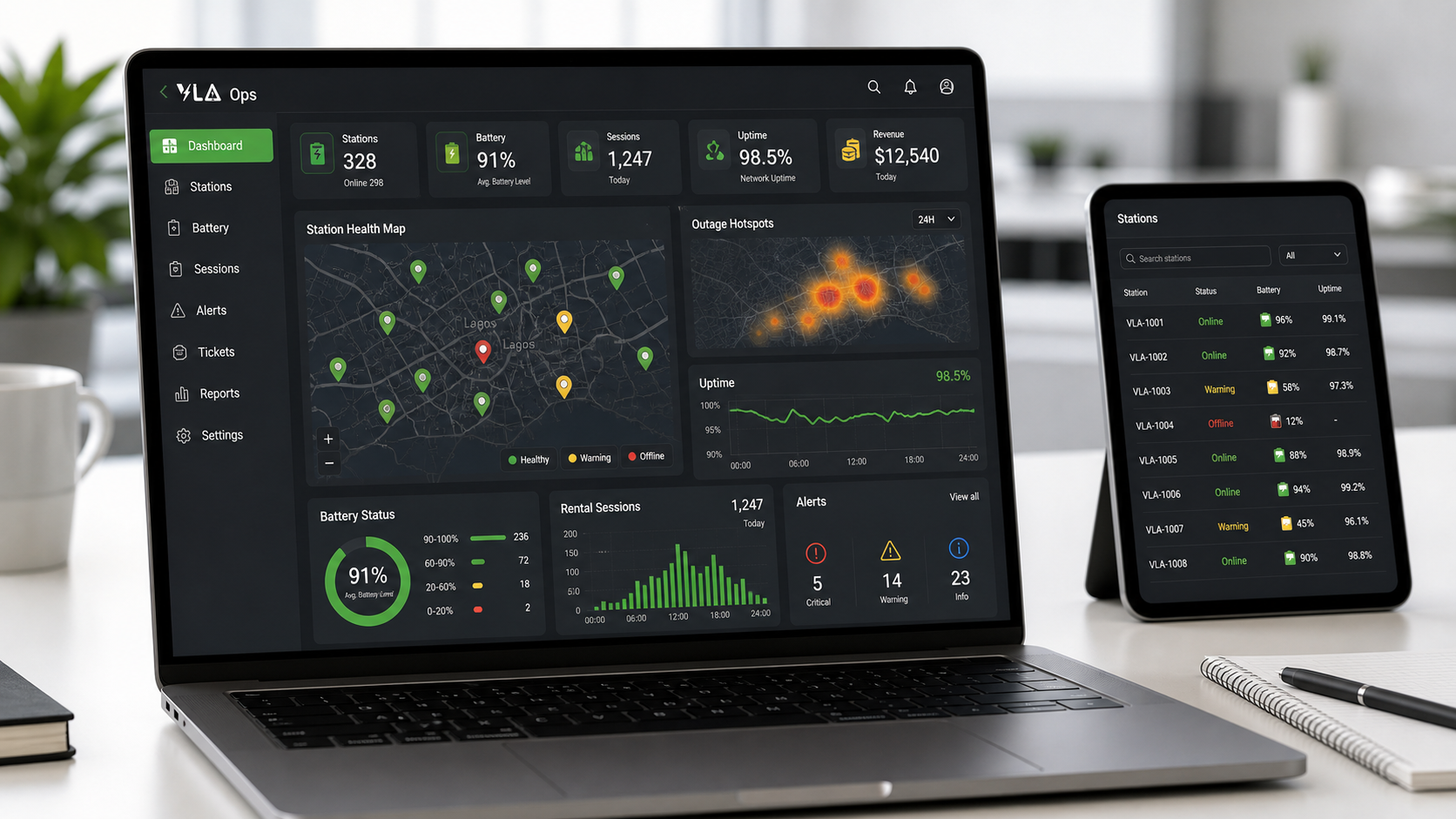
When a location repeatedly shows high rental demand during specific time windows, it may reveal gaps in local power access. VLA uses anonymized station data to help city partners, schools, and community organizations understand changing demand.

2028 Vision
VLA's long-term vision is to make reliable mobile power accessible to more families, students, commuters, and entrepreneurs through a practical public charging network.
Expand coverage around retail districts, transport corridors, universities, and community centers.
Bring affordable charging to schools, low-income communities, and public-interest spaces.
Use anonymized station data to help partners understand outage patterns and public-service gaps.